


Educational Philosophy
When I contemplate my objectives and values as a teacher, I find many parallels with the creation of a theater production. Every element of a performance is important to the whole, while the strength the presentation lies in the quality of all of the components as they relate and support the other fundamentals. My effectiveness as a teacher, like a good director, correlates directly with my passion, creativity and organizational skills. Just audiences see through inauthentic performances, students do not effectively learn from an indifferent teacher. Honesty, commitment, excellence, and courage are my personal standards and those I strive to inspire in my students.
The actor-audience (student-teacher) relationship involves give and take. No two audiences (or students) are alike, and a good actor (teacher) listens to and “feels” the distinctions, adapting their performances accordingly. This sensitive interaction helps both performer and spectator (student and teacher) communicate effectively, thus striving for his or her highest potential. Unless I am able to connect with and engage my audience, my skills, knowledge and experience are useless as an artist and educator. The great director/producer Peter Brook inspired me many years ago when I viewed a rehearsal of The Mahabarata. For more than three hours, his troupe mesmerized group of young children in a high school gym. Mr. Brook explained that if he could engage this audience, without the fancy illusion and tricks of the theatre, that his production would be a success. I continue to bring this “less is more” ideology to my classroom and on stage, focusing on quality and depth over spectacle and fluff.


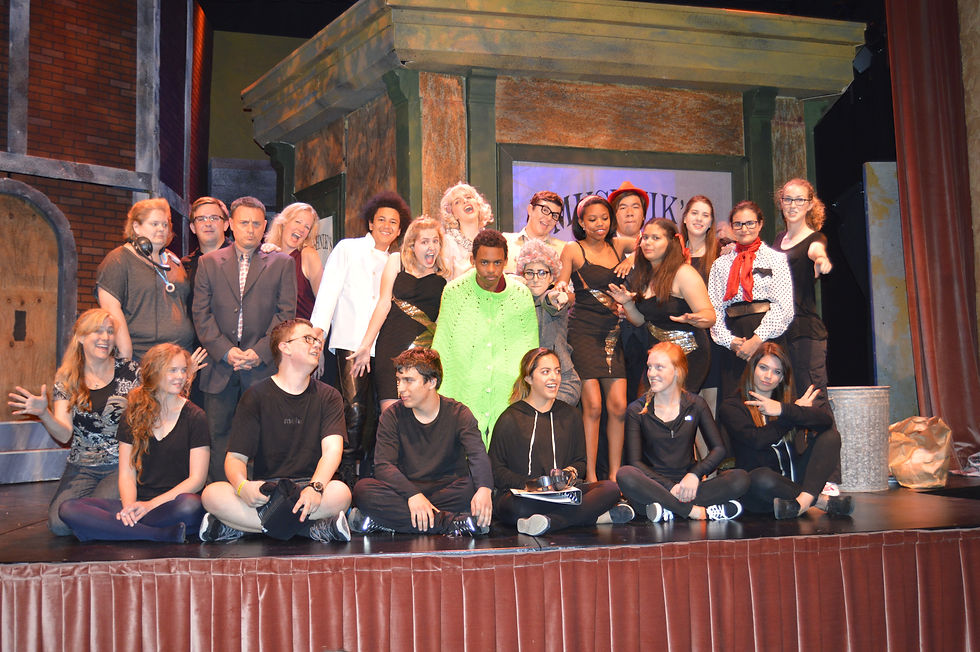
Garden Theatre April 2015

Lighting Design and LBO
Professional Associations
-
Educational Theatre Association Member ID 280475
-
Drama Club/International Thespian Society Sponsor Troupe 6902
-
American Association of Teachers of French
-
Societe Honoraire de Francais/ French Honor Society and French Club Sponsor
-
Florida Teachers Certification (FTCE) K-12 Drama, French Language and Literature 2007.
-
Member of Aerobics and Fitness Association of America (AFAA) certified group exercise, YMCA Group Exercise, Healthy Lifestyles, Pilates and CPR Certifications.
Educational Philosophy (continued)
The script for a production is comparable to the curriculum for a course. The designers and technical elements of the production all work to support this vision, just as a professor stimulates students by teaching to multiple intelligences. It is my job as the director/teacher to help each actor/student interpret their character that enhances the overall vision. A clear intention for each performance piece (the curriculum), for the process or rehearsals (instruction methods), and for the artistic team and audience (students) are indispensable for a successful performance (assessments and learning outcomes). Nevertheless, these should never set in stone. As an artist and educator, I try not to control the creative process, but to allow it to develop naturally through careful guidance and calculated stimuli.
In theatre, I draw upon the works of theorists, genres and theatrical techniques that best help me achieve the desired outcomes. When studying Brecht, I have used multi-media and other recent technology to stimulate students/audiences the way that the Berliner Ensemble would have affected theatre goers in its epoch. I aim to impact students’ social, emotional cognitive and physical development by using a variety of instructional techniques. This approach includes hands on activities, discussions and critique sessions and reflective writing assignments. Direct instruction and lectures are also effective when combined with multi-media and other visual aids.
The applause and laughter of the audience is a palpable measure of the success of a performance. Achievement in education is evident in final exams or skills testing, but it should also be examined throughout the learning process with a variety of assignments and evaluations. The character work, rehearsals and performances are all building blocks on which the actor continues to deepen and solidify his or her own standards for authentic performances. Learning continues long after the last curtain has fallen. Many years after I have formally taught a student when I learn the impact that my classes and productions had on their lives. Whether those students have continued in the arts or life has drawn them in other directions, it is clear that those high standards of excellence, values, courage and commitment have served them well.
Ultimately, this is why I teach. Not because I feel that I cannot act, but because I know that my performance as an educator serves a much wider audience. As the proverb says…give a man a fish, he eats for a day…teach a man to fish he eats for a lifetime. I like to imagine that I have taught students not only how to “fish”, but also encouraged them to examine what, why and where they “fish”. I am motivated by the idea that they find avenues through which they can create and pursue a meaningful, happy life, and are prepared to contribute positively to society by producing and enjoying quality artistic endeavors.